






Details
ACRYLIC RODS
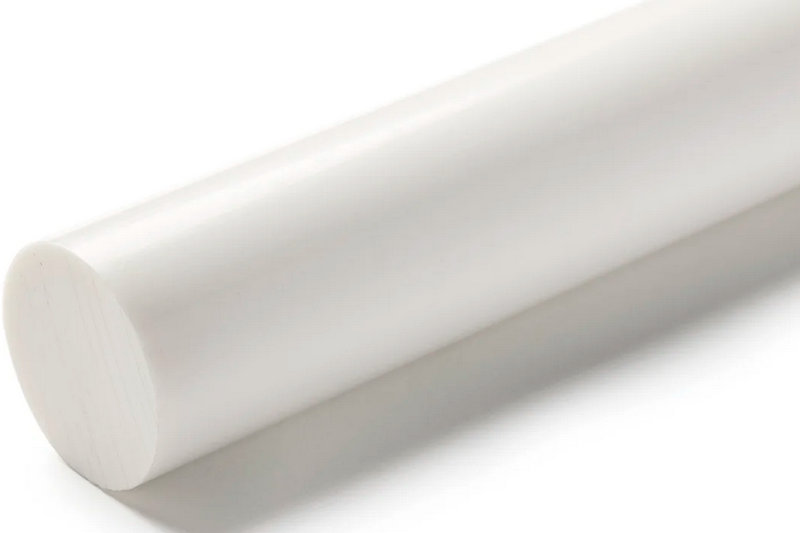
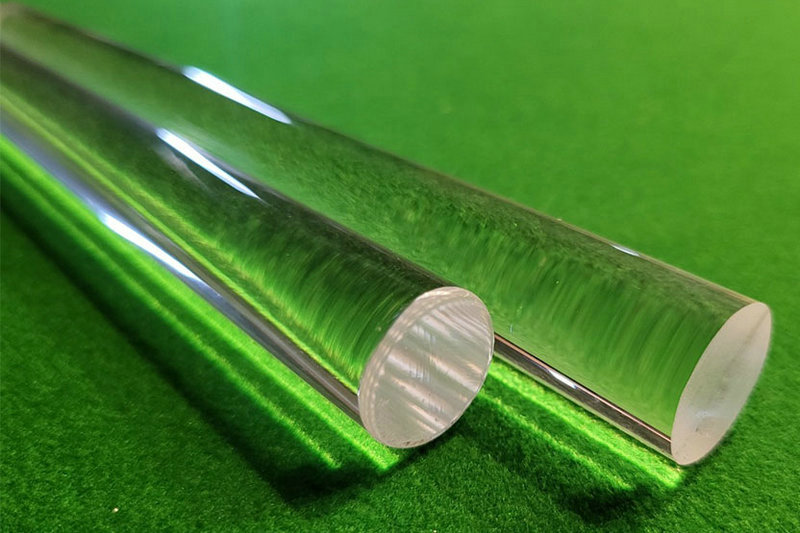
Acrylic rods, also known as PMMA rods (Polymethyl Methacrylate Rods), are rigid, cylindrical plastic rods made from acrylic resin. They are widely used as a lightweight, shatter-resistant alternative to glass and other materials requiring optical clarity.
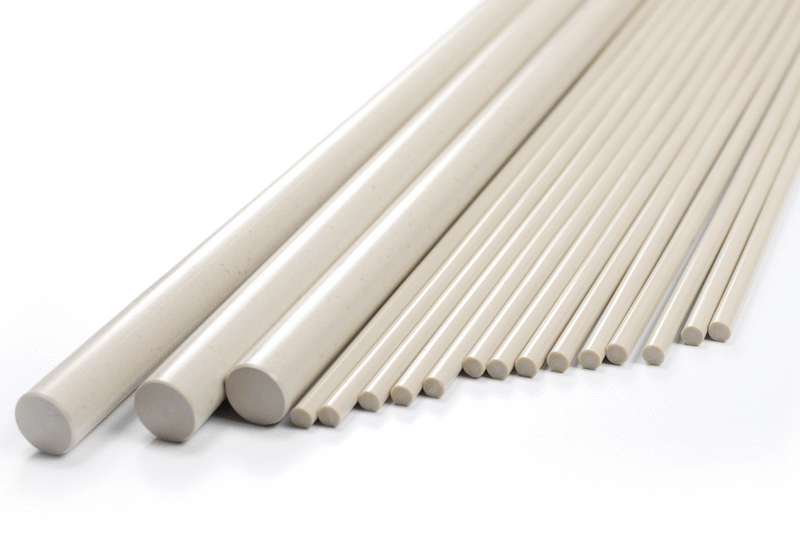
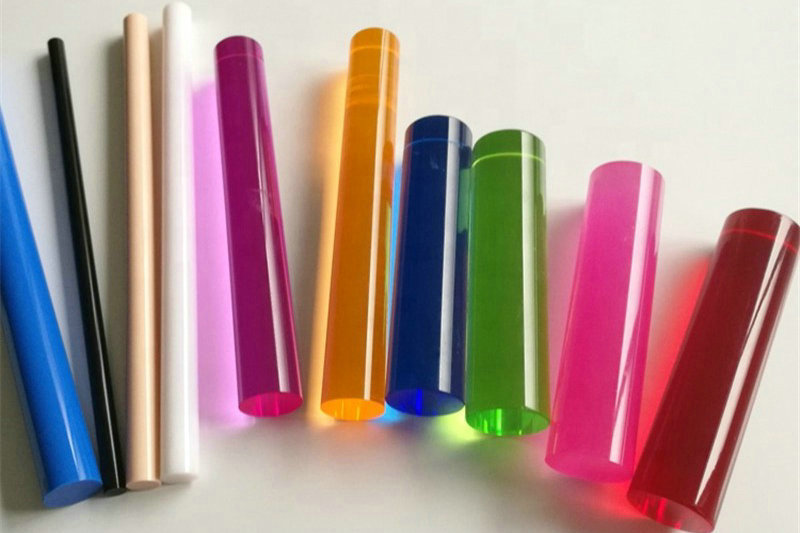
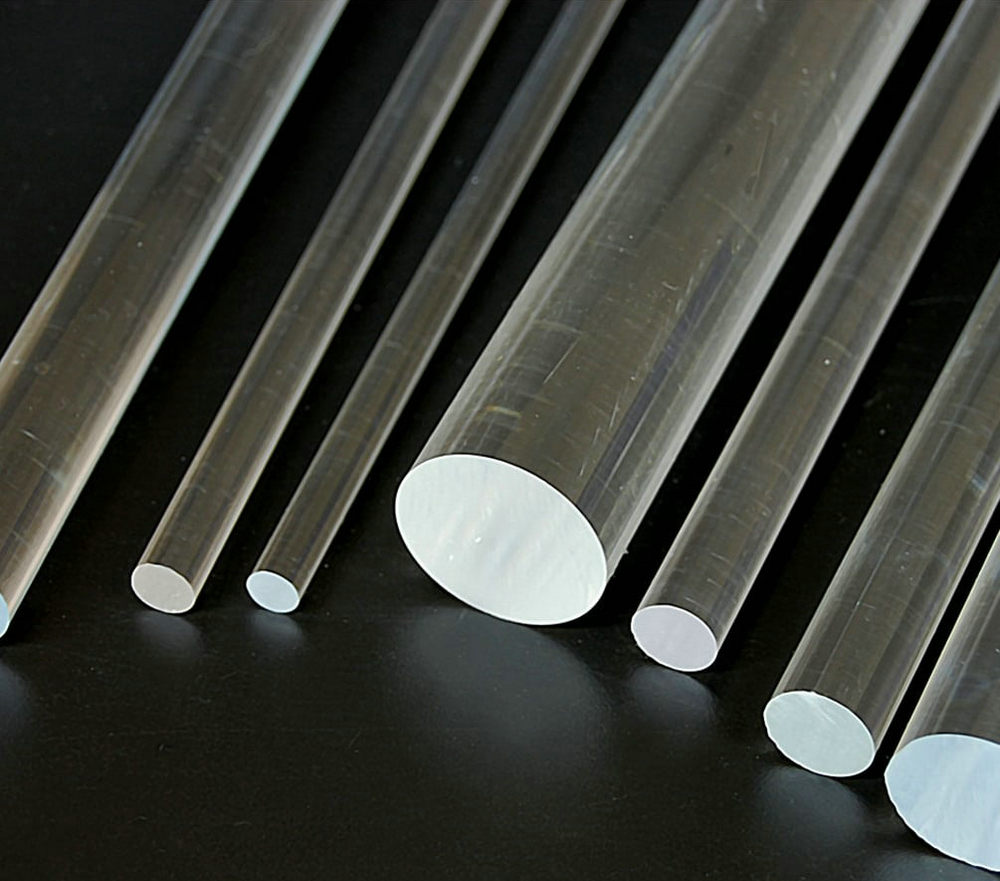
Acrylic rods come in various diameters, lengths, colors, and finishes. These rods are produced via extrusion or casting. They are valued for their transparency, strength, and versatility in applications such as signage, decorative lighting, medical devices, architectural designs, and industrial components. They serve as alternatives to glass or polycarbonate in contexts where shatter resistance and optical clarity are critical.
Key Features:
Optical Clarity: Transmits 92% of visible light (comparable to glass).
Lightweight: 50% lighter than glass (density: 1.18–1.20 g/cm³).
Impact Resistance: 10–20x more shatter-resistant than glass.
UV Resistance: UV-stabilized grades resist yellowing and degradation.
Machinability: Easily cut, drilled, turned, or polished with standard tools.
Chemical Resistance: Resists water, alcohols, and weak acids but vulnerable to solvents (e.g., acetone).
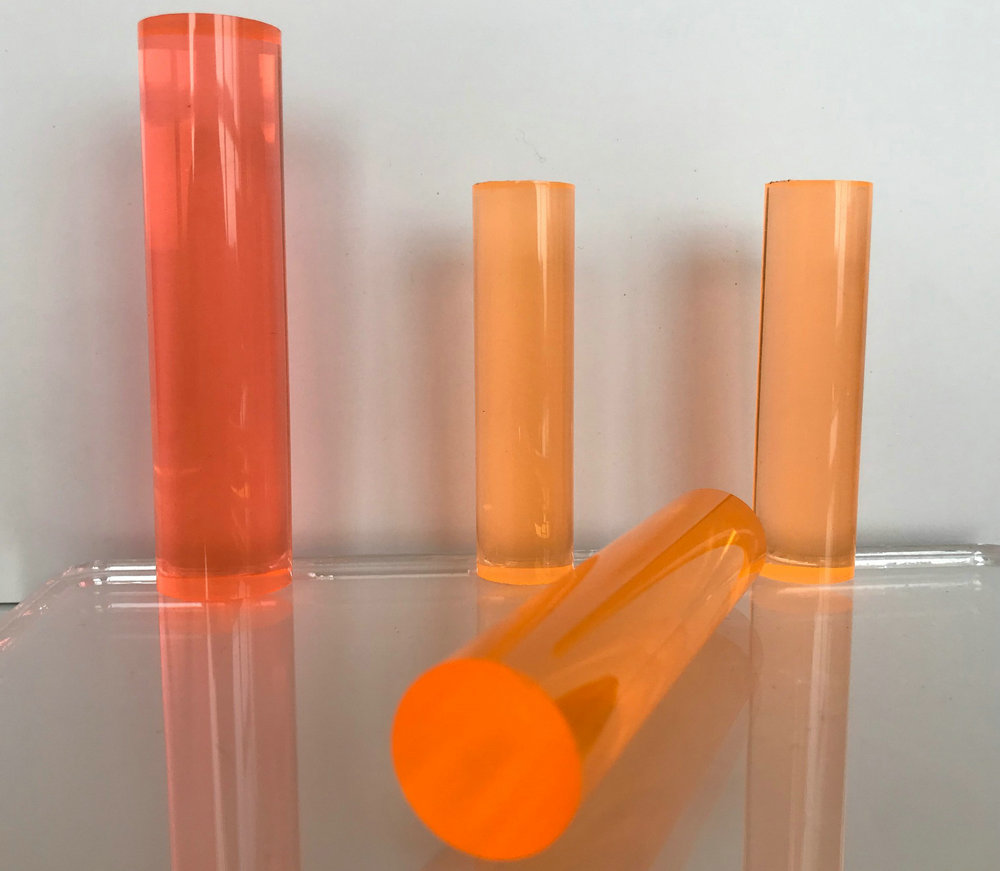
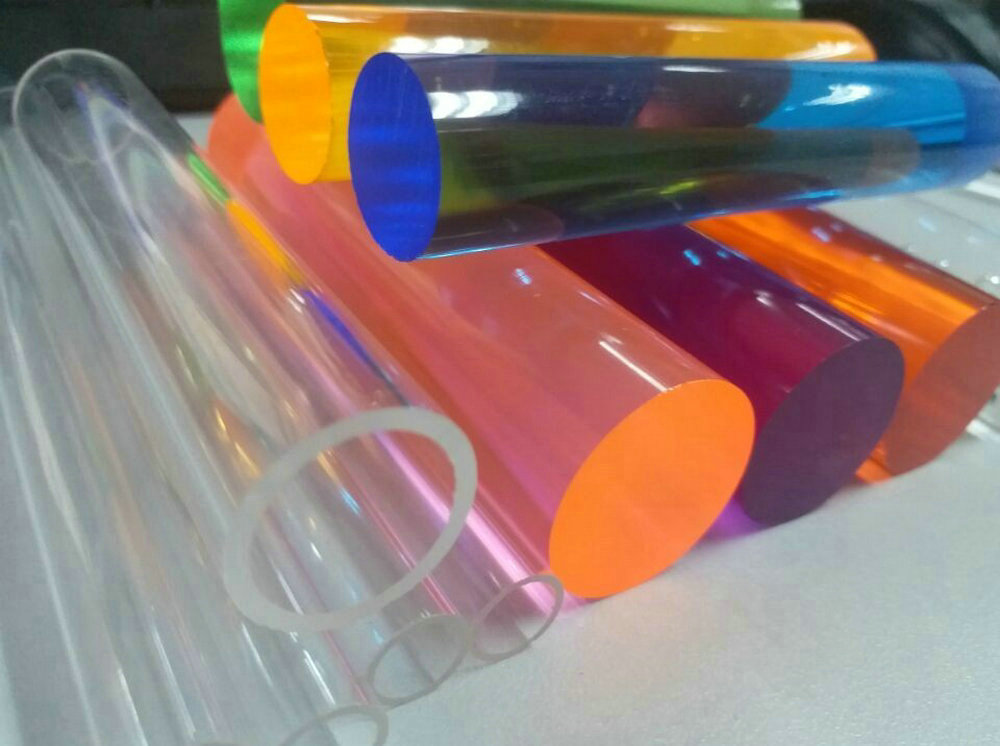
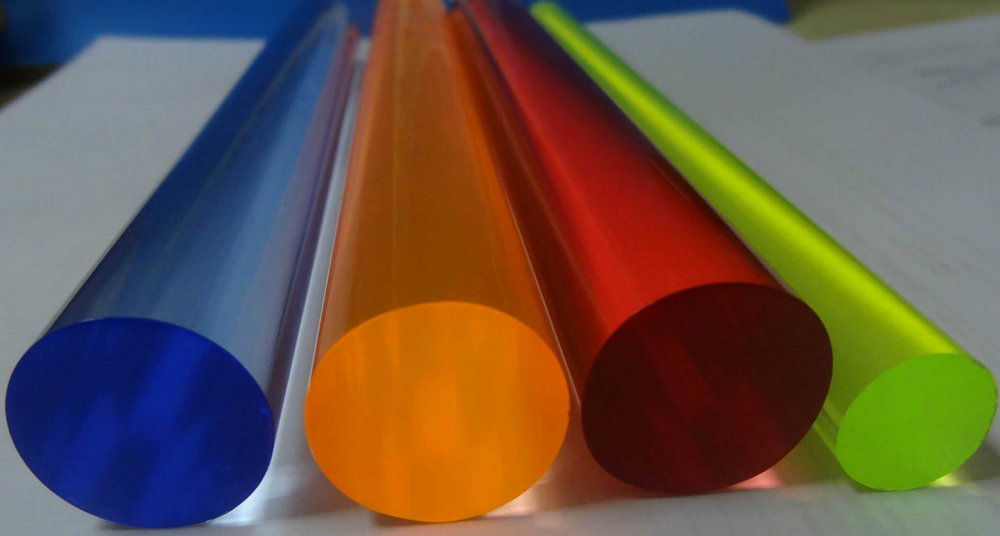
Aesthetic Versatility: Available in transparent, translucent, opaque, and fluorescent colors.
Types:
Acrylic Rods are available in different grades, colors, and surface finishes to meet specific needs:
Type | Description | Applications |
Cast Acrylic Rods | Produced by pouring liquid PMMA into molds. Superior optical quality, thicker diameters, and better edge finish. | Display stands, lighting fixtures, high-precision prototypes. |
Extruded Acrylic Rods | Made by continuous extrusion. Cost-effective, uniform diameter, but slightly softer. | Retail displays, DIY crafts, structural supports. |
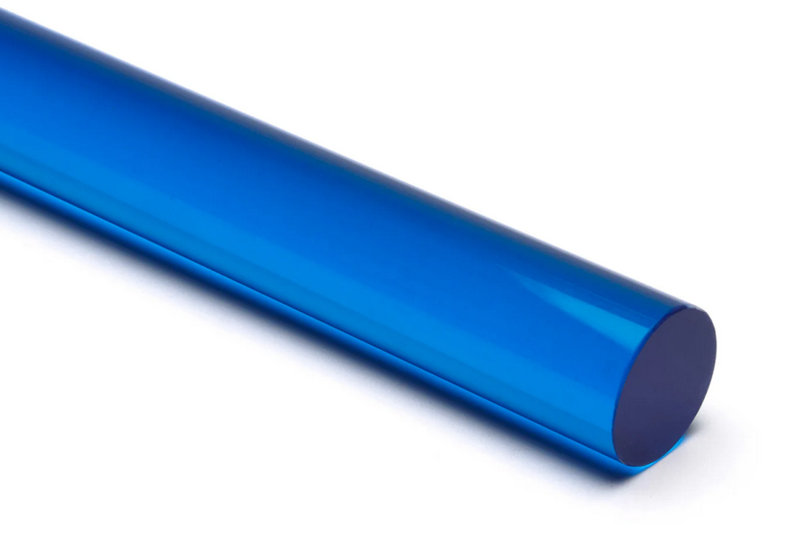
Colored Acrylic Rods | Pre-dyed rods in transparent, translucent, or opaque finishes (e.g., red, blue, black). | Art installations, decorative furniture, signage. |
| Type | Description | Applications |
| UV-Resistant Rods | Contains UV inhibitors for outdoor use. Prevents yellowing and brittleness. | Outdoor sculptures, garden decor, architectural accents. |
| Fluorescent Rods | Glow under UV light. Ideal for decorative or safety applications. | Nightclubs, emergency signage, artistic lighting. |
| Textured/Grooved Rods | Surface patterns (e.g., fluted, ribbed) for grip or decorative effects. | Handrails, tactile indicators, design elements. |
Technical Parameters:
The following table summarizes key technical specifications of some types of Acrylic Rods:
Property | Value / Range | Description |
Density | ~1.19 g/cm³ | Lightweight yet durable. |
Light Transmittance | ~92% | High optical clarity. |
Impact Strength | ~10-17 times stronger than glass | Shatter-resistant. |
Hardness | ~M85 (Rockwell) | Scratch-resistant versions available. |
Thermal Conductivity | ~0.19 W/m·K | Low heat conductivity, good insulator. |
Service Temperature | ~-40°C to 85°C | Can withstand temperature fluctuations. |
Melting Point | ~160°C | Thermoformable at high temperatures. |
UV Resistance | Excellent (with UV-stable grades) | Suitable for outdoor use. |
Water Absorption | ~0.3% (24h at 23°C) | Low moisture absorption, good dimensional stability. |
Flammability Rating | UL94 HB | Self-extinguishing in flame. |
Chemical Resistance | Good resistance to mild acids and bases | Avoid prolonged exposure to strong solvents. |
Product Benefits:
Stronger & Safer Than Glass – Impact-resistant and shatterproof.
Lighter & Easier to Handle – 50% lighter than glass, making transportation and installation easier.
Highly Transparent & Aesthetic – Provides a modern and stylish appearance.
Weather & UV Resistant – Can withstand outdoor conditions without yellowing.
Customizable & Fabrication-Friendly – Can be cut, bent, drilled, laser-cut, and polished.
Electrical Insulator – Does not conduct electricity, making it ideal for electrical applications.
Versatile Color & Texture Options – Enhances design possibilities.
Eco-Friendly & Recyclable – Cheaper than polycarbonate and glass and Can be repurposed for sustainable applications.
Applications:
--Architecture & Design:
oBalustrades, stair railings, decorative columns.
oLighting diffusers, skylight supports.
--Retail & Display:
oProduct stands, mannequin components, signage posts.
--Art & Sculpture:
oTransparent sculptures, kinetic art, 3D installations.
--Industrial:
oMachine guards, conveyor rollers, alignment pins.
--Medical:
oNon-reactive surgical tools, lab equipment handles.
--Consumer Goods:
oFurniture legs, curtain rods, aquarium accessories.
Storage & Handling:
Temperature: Store at 10–30°C; avoid temperatures >80°C (risk of deformation).
Humidity: Keep relative humidity <60% to prevent moisture absorption.
UV Exposure: Cover with opaque material if stored outdoors; use UV-resistant grades for long-term outdoor use.
Stacking: Store horizontally on padded racks; avoid vertical stacking to prevent bending.
Handling: Use gloves to avoid fingerprints; clean with isopropyl alcohol and microfiber cloths.
FAQ
Q1: Do acrylic rods turn yellow over time?
A: Standard acrylic may yellow over decades, but UV-resistant grades remain clear even with prolonged sun exposure.
Q2: Can acrylic rods be drilled or cut?
A: Yes, they can be easily cut, drilled, and machined using proper tools.
Q3: How do I polish scratched acrylic rods?
A: Use a progressive grit sandpaper (600 → 2000 grit), then polish with a buffing wheel and acrylic polish.
Q4: Can acrylic rods be bent into shapes?
A: Yes—heat evenly with a strip heater or oven (150–160°C) and mold into desired form.
Q5: Can I use acrylic rods outdoors?
A: Yes, but UV-stabilized grades are essential to prevent yellowing.
Q6: What solvents can I use to bond acrylic rods?
A: Use chloroform or acrylic cement (e.g., Weld-On #4) for seamless bonds.
Q7: What’s the maximum diameter of acrylic rods available?
A: Standard diameters range from 1mm to 150mm; custom rods up to 300mm are possible.
Q8: Are acrylic rods recyclable?
A: Yes, but recycling is limited. Look for PMMA-specific recyclers or repurpose scraps.
Q9: Are acrylic rods food-safe?
A: Only FDA-compliant grades are suitable for direct food contact.
- PRE: 20100 Acrylic Sheets
- NEXT: No more